Democratizing Filmmaking: How Elson Leverages Viggle AI for Precision and Creativity
Viggle
Democratizing Filmmaking: How Elson Leverages Viggle AI for Precision and Creativity#
Follow Elson Huang (@el.cine) on X.
Viggle: Can you share your background and how you started with AI tools?
Elson: I was a film professional for about ten years. Around a year ago, I got early access to Kling, and while I wasn't initially taken with it, I decided to try it on a car shoot. The output shocked me—I realized how much money and time it would've taken to shoot that scene in reality. That moment kicked off my AI journey, and I started exploring other AI tools.
What amazed me most was the speed of innovation in AI compared to traditional editing tools. Traditional editing and filmmaking tools take forever to update, and the upgrades are often barely noticeable. With AI, the pace of improvement is breakneck, even though there are still limitations.
Viggle: What was your first experience like with Viggle?
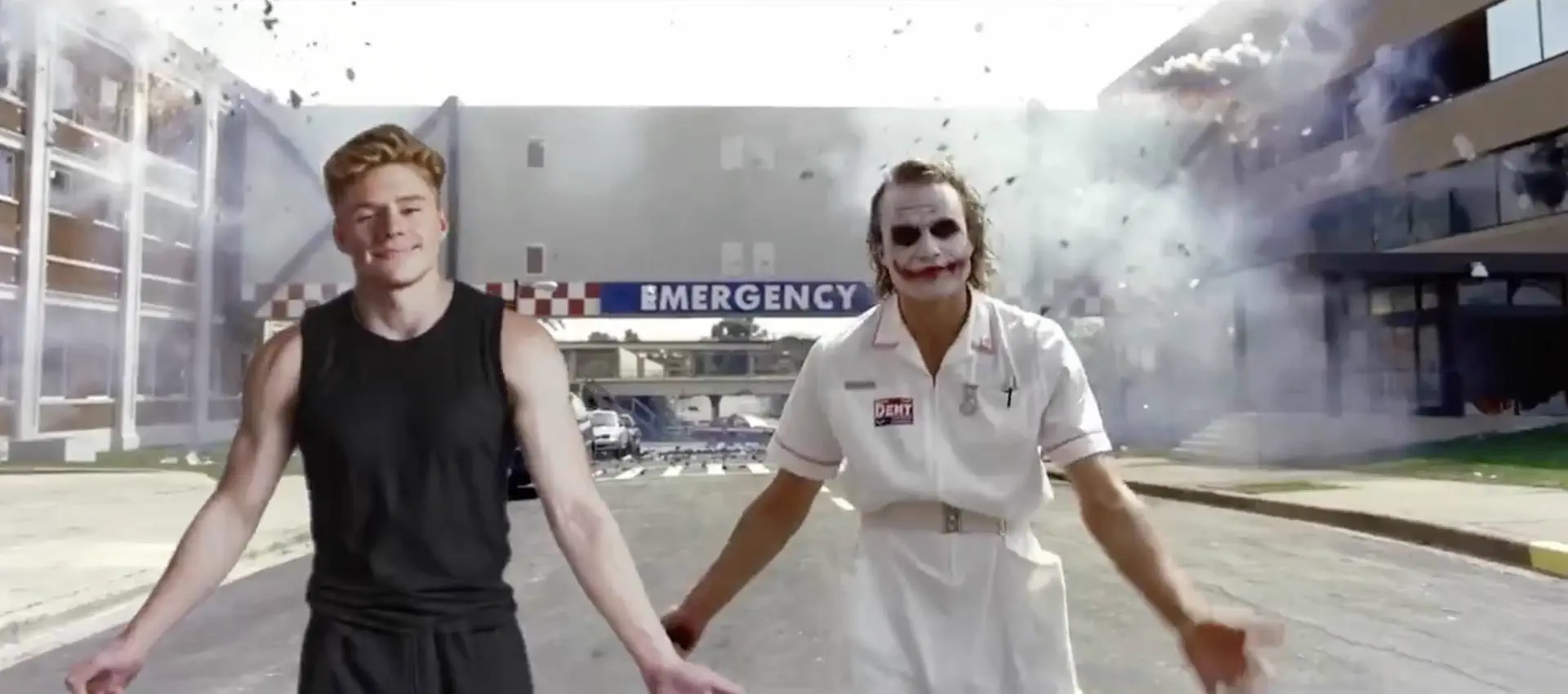
Elson: You guys reached out, and I decided to try Viggle. I saw potential in your greenscreen feature, as it allowed me to change lighting and explore different creative options. Then, when your V3 model came out, I was impressed. Motion capture improved significantly, and facial recognition became shockingly accurate. With just one picture and one motion video, V3 could seamlessly complete a character's back. It was incredible.
One of the biggest challenges with traditional video-to-video tools is consistency and control. They rely on word prompts to describe characters, which makes it impossible to stitch two angles of the same character together because the characters would need to be consistent. Viggle solves this problem. It's the only tool that allows film professionals to produce and control character movements with precision. For close-up character acting, no other AI tool compares. Most other tools are only good for B-rolls, but Viggle's advancements make using AI for professional filmmaking possible.
Viggle: Can you walk us through your workflow for a recent project
Elson: Absolutely! Here's how I approached a recent project:
- Video Setup: I shot my motion clips and gathered character visuals.
- Viggle: I used Viggle for motion capture and character generation, taking advantage of its ability to create consistent characters from multiple angles.
- Post-processing: I refined the lighting and textures using Magnific.
- Final Touches: Everything came together in editing software, polished for a professional finish.
Viggle: What excites you most about the future of AI in filmmaking?
Elson: I think the future of AI lies in 3D modeling and spatial intelligence. Some companies are already pioneering text-to-3D and image-to-3D environments. This is the next big leap. Unlike pixel-based generation, 3D models allow creators to place cameras and lights wherever they want. It's closely tied to real-time film shooting and has the potential to be even better.
For the industry as a whole, AI will lower the entry barriers for filmmaking. Right now, if you have a great idea, you need funding, and investors often compromise creativity in favor of profit. With 3D AI, we'll see an explosion of filmmaking driven by the best ideas rather than the biggest budgets. It's going to elevate the bar for creativity and democratize the entire creative process.
Join our creator program to enjoy Pro features and the latest product updates!
Reach out to us at [email protected].