Reimagining True Crime Narratives with Viggle AI’s Motion Capture Magic
Viggle
Reimagining True Crime Narratives with Viggle AI's Motion Capture Magic#
Follow Max Einhorn on X.
Viggle: Can you share your background and how you got into video GenAI?
Max Einhorn: I was born in Los Angeles because my parents wanted to make it as actors. My dad worked as a tour guide at Universal Studios. I went to Temple University to study film and entertainment, which set the foundation for my career. After graduating, I worked for an independent film producer involved in Sunshine of the Spotless Mind and then moved on to work with Pinkus. Later, I joined Film XX, one of the largest distributors of film, and of man, I moved to my current firm last year.
It wasn't until 2022 that I got into GenAI, starting with tools like ChatGPT-3 and Synthesia. The idea of putting characters on TV using GenAI fascinated me—not just for its creative potential but for how it could democratize production. The industry has been undergoing massive changes over the past decade, especially with streaming platforms breaking the stronghold of traditional studios. GenAI is accelerating these shifts, lowering the barriers to entry for creators who no longer need millions to produce high-quality content.
Viggle: How did you discover Viggle, and what drew you to it?
Max: Like many GenAI tools, I came across Viggle on X/Twitter, where a lot of the latest research and innovations are shared. I'm always tinkering with new tools, and Viggle stood out to me because it's so different from the oversaturated text-to-video models out there.
What I found particularly fascinating was Viggle's use of motion capture—it's just so fun and unique. Who wouldn't waI found Viggle's use of motion capture particularly fascinatingnt to wear the skin of something else and play pretend? Whether it's the Lil Yachty dance or other creative concepts, there are very few tools out there that make it this easy to transform characters into dynamic, believable motions.
Viggle: Can you walk us through the inspiration and workflow behind your most recent project?
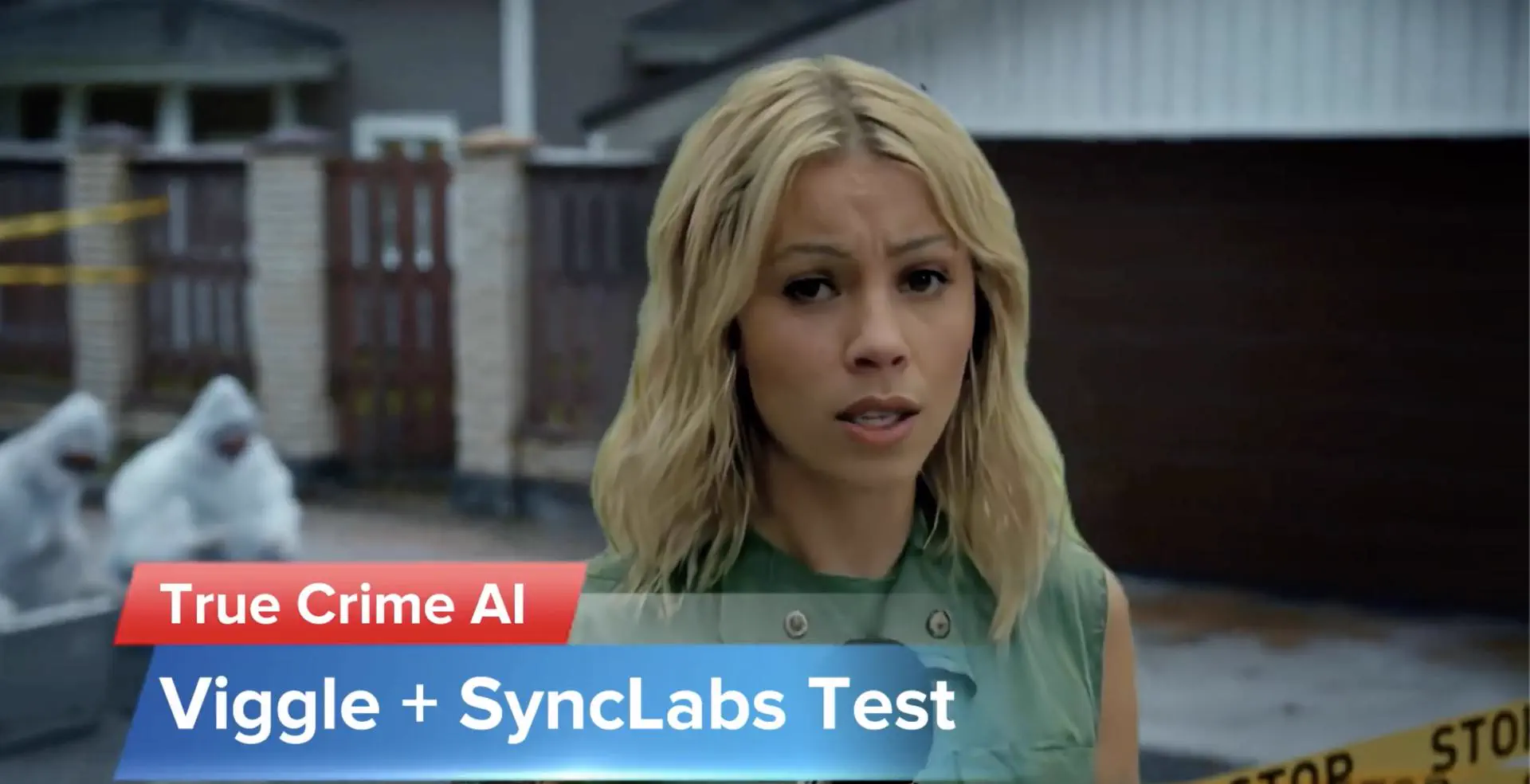
Max: I was playing with the concept of creating a true crime story using GenAI. I've always been drawn to telling stories that serve specific ideas, so I created a character who's deeply invested in YouTube true crime investigations.
For the project, I used Viggle to put this character directly into a crime scene. I found footage of a woman standing in a crime scene and swapped her out with my character using Viggle. The result was seamless, and I loved how easy it was to maintain character consistency across the scene. It's an exciting tool for putting characters into very specific scenarios with minimal effort.
Viggle: What's your outlook on AI and its role in the future of filmmaking?
Max: It's incredible how far GenAI has come in such a short time. There's a growing demand for tools that provide character and location consistency, along with as much creative control as possible. The fact that this space is becoming increasingly competitive is exciting—it only speeds up the pace of innovation.
I think the next step is giving creators more control over characters and spaces in a fully realized 3D environment, like a simplified version of Unreal Engine. We live in a 3D world, so I believe tools will evolve to reflect that level of realism and flexibility. I believe Viggle is very promising.
Join our creator program to enjoy Pro features and the latest product updates!
Reach out to us at [email protected].