Blending AI and Traditional VFX: How Yves Leverages Viggle for CGI and Stylized Animation
Viggle
Blending AI and Traditional VFX: How Yves Leverages Viggle for CGI and Stylized Animation#
Follow Yves on LinkedIn, Instagram, and X.
Viggle: Hi, Yves! Can you tell us your background and how you got started in animation?
Yves Dalbiez: I’ve been a 3D animation film director for 20 years, working with live-action and animation tools on commercials and feature films while also building my rigs and supervising animations. Coming from the VFX industry, which is extremely technically demanding, I was always fascinated and exploring new tools that could help our work in animation and post-production.
I’ve always been passionate about non-realistic animation, drawing inspiration from Japanese 2D animation and the numerous talented artists I worked with and encountered as a 3D artist. Over the years, I started integrating more technological advancements into my projects to make the creative process more efficient.
Viggle: How did you discover Viggle, and what was your first impression?
Yves: I already made my first AI-assisted commercial last year, blending AI with animation workflows.
When I first tried Viggle Version 1 and Version 2, I found them not precise enough for professional use. So I was waiting for the right time to use it. But I kept following its development and saw Enigmatic_e using Viggle alongside Stable Diffusion, which I was more familiar with. That caught my attention. When Viggle V3 launched, everything changed. It finally felt stable and precise enough for professional work, allowing for a proper post-processing when applied to live-action footage.
Unlike other AI tools, Viggle empowers VFX artists by saving them an incredible amount of time on a tedious necessary task. No one enjoys manual tracking and plate cleaning, so this tool is a real game-changer.
Viggle: Can you walk us through the workflow for your recent AI film, ANPU?
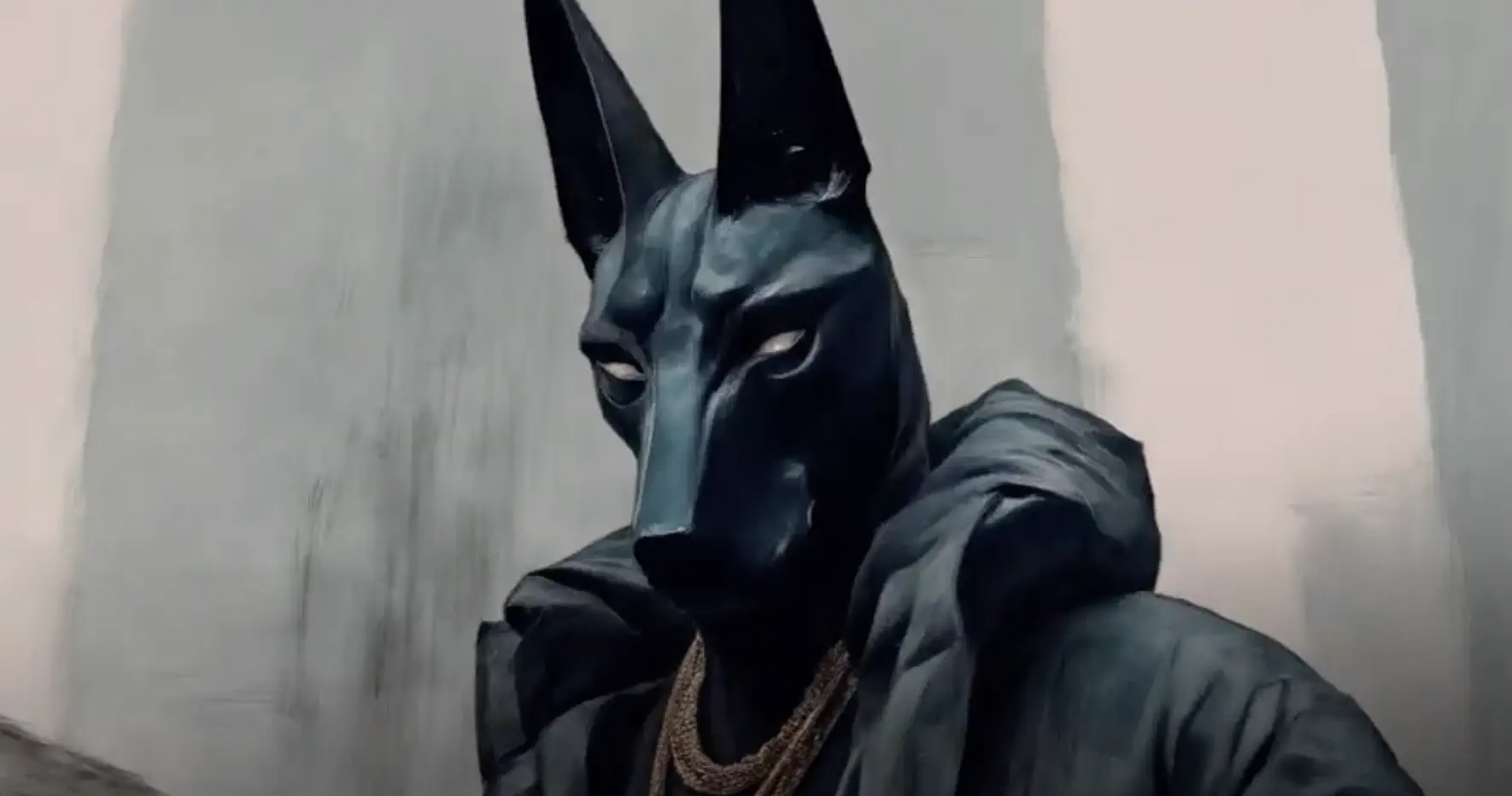
Yves: "ANPU" reimagines Anubis, the Egyptian god of the afterlife, as an unseen presence in modern Tokyo, silently observing humanity before performing a ritualistic dance at Shibuya Crossing to weigh the quality of human hearts. Inspired by my childhood fascination with Egyptian mythology and the enigmatic power of gods with animal heads, this film explores the idea of invisible forces witnessing our world. The project was an intense 25-day experiment blending real-life shooting, AI-driven tools like Viggle to craft a unique visual language. What started as a technical showcase has now sparked a larger narrative universe that I’m developing beyond this short film. I’m also planning to release a few Behind-the-scenes videos about the short.
ANPU combines real-life shooting at Shibuya Crossing with AI-driven techniques to get a unique visual style. Advancements in Viggle V3 allowed seamless face replacement, a process that once required extensive CGI. I used Viggle for motion capture and movement for most of the shots.
I then used Mago Studio for stylization, and Kling AI and Minimax to generate additional shots. I used Runway for background cleaning and heavier VFX work.
Each shot was meticulously storyboarded and treated like a painting, from art direction to final composite and color grading with Davinci Studio, following a tailored workflow to achieve the final look.
Honestly I was stunned by the way Viggle could handle complex shots sometimes and recognize the position of my character in the scene, plus it was fast, in less than 60 seconds, it was done, which made the work extremely efficient.
But what I enjoyed the most was seeing how well the V3 model kept the specificities of the character design. Anubis has long ears, so in some shots, it was hard for Viggle to keep them visible on the character after processing.
But with little tricks, trials and errors, I could manage to keep the ears on most of the shots. Which was a relief because it was my biggest fear before to start the production, that some shots wouldn’t work or wouldn’t track the character well.
Once engaged, the project was fully dependent on whether Viggle would recognize and track the character properly. It was a success, so it was a relief when I got all the shots processed. We really pushed Viggle to its maximum capacity in a professional setting in a limited amount of time. Viggle really helped me cut the time and cost when it comes to character replacement and compositing.
Viggle: What’s your outlook on AI’s role in filmmaking?
Yves: Even though I work on various realistic rendering projects, I love exploring about the non-realistic renderings like ANPU. I think they bring a touch of originality and freshness closer to a director’s personality compared to all the similar AI content being posted on socials.
I’m incredibly excited about collaborating with a team of animators to create simple 3D characters in Maya without specific character design, which we could then input into Viggle for motion capture and character design reference. I’m currently evaluating different possibilities and offers to turn ANPU into a full series. Since working on Project Odyssey, many potential collaborators have reached out, urging me to continue the ANPU series.
As an artist myself, I understand the concerns about copyright issues and about the original creative works giving way to automation. These are very legitimate concerns that the whole creative sphere is still trying to apprehend. Copyright concerns still need to be addressed, with cleaner and more ethical models built on trust and agreement with all our talented artists and creators.
AI is creating disruptions in the traditional VFX industry. But rather than seeing AI as a threat, I’d rather be a link between emerging AI artists and VFX and animation professionals.
Want to explore AI-powered motion capture for your next project?
Join our creator program to enjoy Pro features and the latest product updates!
📩 Reach out to us at [email protected].