The Black Mirror Experience: A Case Study of the Viggle API on Our Video Model
Nan Ha
The Black Mirror Experience: A Case Study of the Viggle API on Our Video Model#
I watched almost all the Black Mirror episodes. I thought the plots were still far away from me. Until I went to the VR Black Mirror experience in Montreal. It was one of the very few times I'd ever done VR, and I have to say, everything felt so real, and even surreal.
Inside The Black Mirror Experience: a VR show that builds an AI version of you#
The Black Mirror Experience is an immersive show produced by Banijay Live Studio and UNIVRSE, the Barcelona-based VR studio, and my company Viggle came in as a major tech partner. So I walked in knowing a little about how it was made. That didn't help at all.
You've been invited to the opening of Phaethon Labs, a company that looks like every tech showroom you've ever walked into, on the day it launches LifeAgent — an AI companion that learns who you are and helps you become your "best self." A welcome video from the founder plays. Then, before anything begins, they take your photo, record your voice, ask you to pick the two things you want most out of life, and have you sign away the rights to your likeness, your voice, and your neural impulses.
Then the headset goes on, and Phaethon starts building the AI agent of you. You spend the rest of your time there training it — through games, through conversation, through a session with a CG Sigmund Freud who asks you to describe your last dream and then shows it back to you. Your companions are standing right next to you the whole time, and none of you are seeing the same thing. Somewhere along the way, the thing you've been training starts to look like you, sound like you, and want the things you told it to want. That was strangely thrilling. It was also the point where I stopped thinking about it as a show.
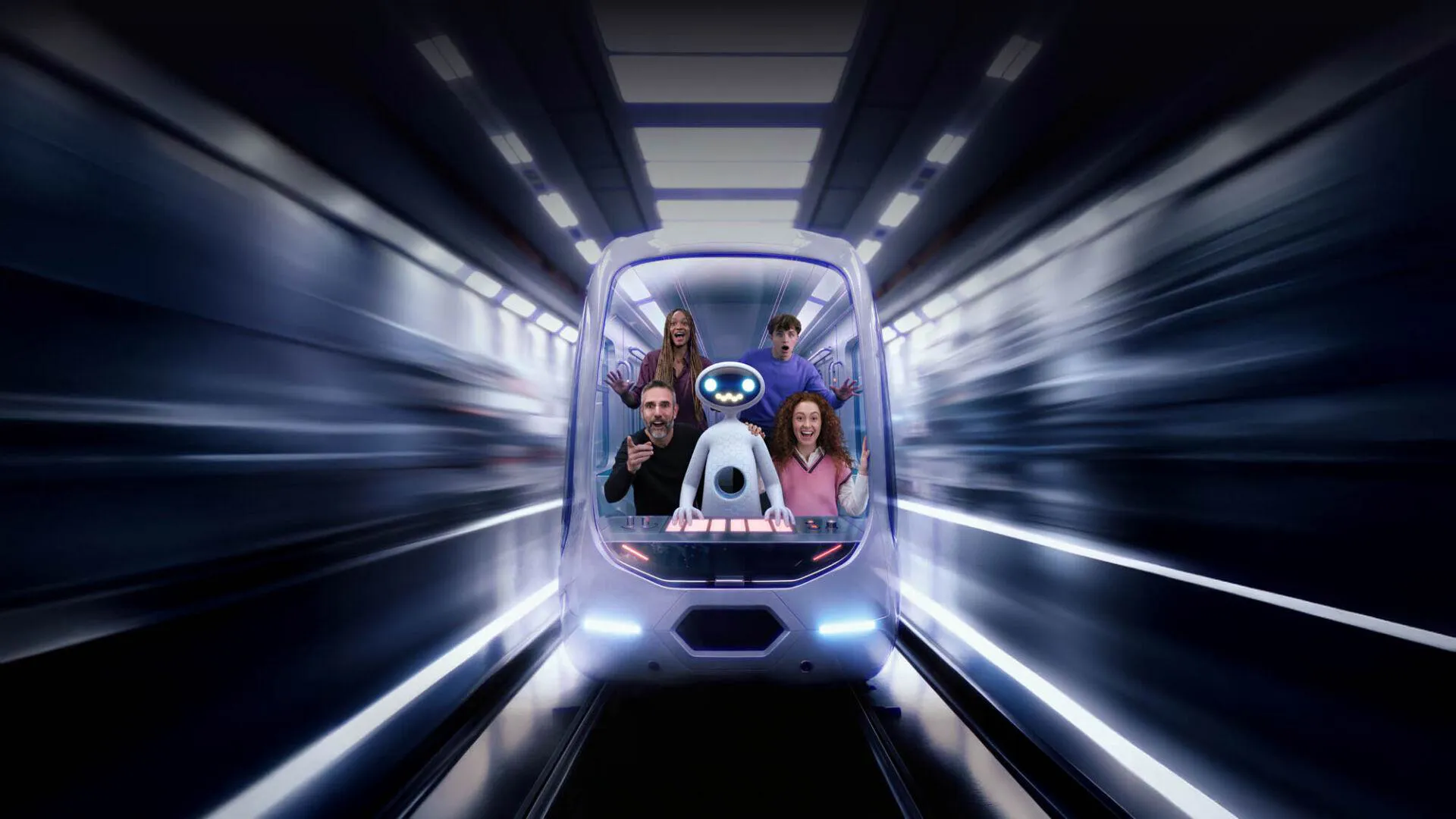
I won't spoil how it turns. But the part I keep replaying is the end. The tour cart pulls out of the lab, I look out the window, and the whole street is billboards playing clips of me. Me podcasting. Me climbing. Me performing on a stage. Me as anyone, living any life. The coolest thing I've seen, and a little too much me. Those clips are Viggle outputs.
Source: Nan's LinkedIn
How Viggle's AI video generation API made every guest the star#
So how did Viggle actually work here? Remember the beginning, when everyone gets a full-body photo taken? That photo is the whole input. Viggle's video generation model takes it and maps you into a set of pre-made clips — the podcast, the climb, the race — so the output is that same footage, with you in the lead role. Every person in the group gets their own set of personalized videos. Everyone looks out the window and sees themselves living a dozen different lives at once, like a multiverse with a cast of one. At the end of the experience, you can scan a QR code and get a highlight video of your own journey. That video is made by Viggle too.
That's one example of what our video API can do. Under the hood is JST-2, our in-house model: give it one image and one video, and you can drop anyone into any scene and make them the star.
What this means for immersive entertainment and live experiences#
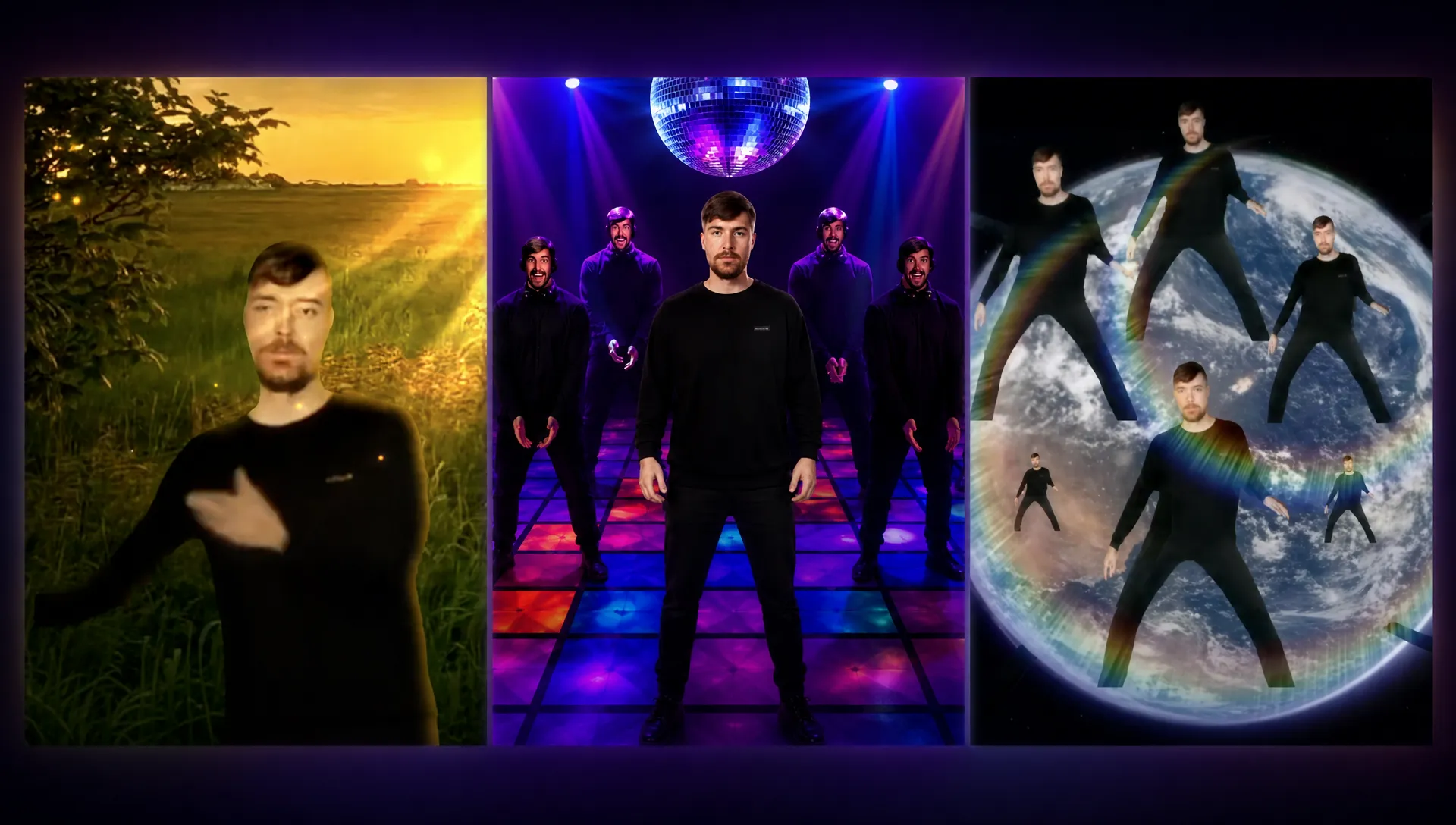
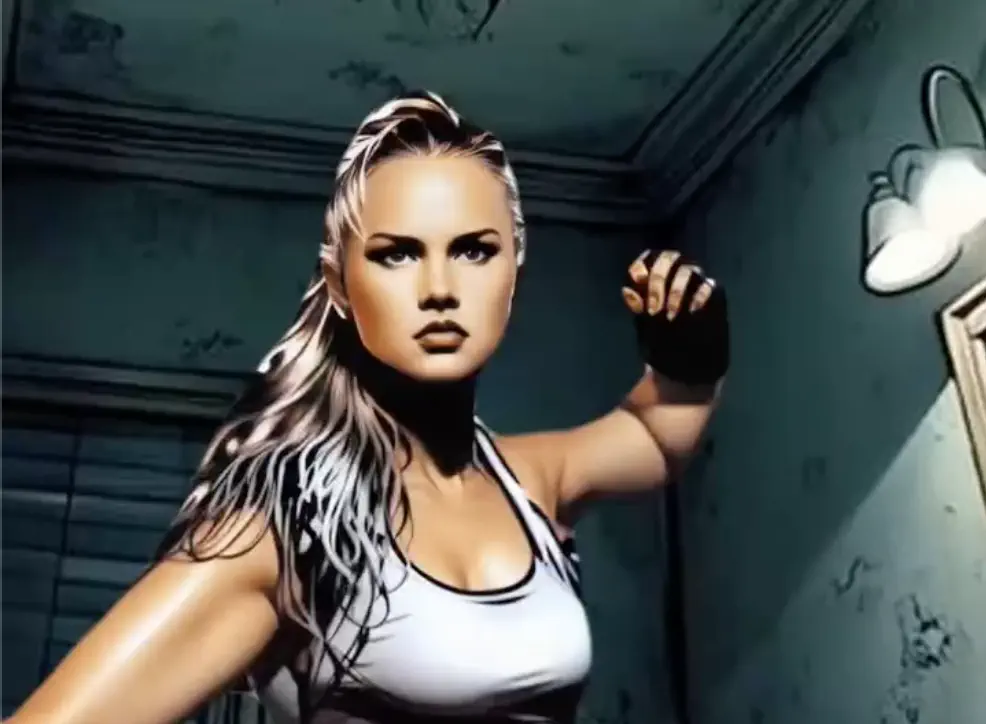
We've done the "see yourself in a video" thing at live events before. We've brought the same capability into a few different rooms. At Governors Ball and Bonnaroo with Coke Studio, festival-goers stepped into a booth, took a photo, and got back a music video with themselves performing in it. At the College Football National Championship with Modelo, fans' own movements became recreations of iconic football plays. With AWA Studios, Ronda Rousey's graphic novel launched as a minisite where fans uploaded a photo and fought the main character. And in The Black Mirror Experience, your photo goes somewhere else: into the story. The clips are rendered onto the billboards of a virtual street, inside a VR world, at the moment the script needs you to see yourself.
Three things change when that's possible.
First, personalization stops fighting throughput. A location-based show lives on how many people it can move through per day, and for years that meant personal content was either a name on a screen or a one-off render nobody could afford at scale. Now it's one photo per guest and a few seconds of compute, so every session can be unique without slowing the line down. That's a change in the unit economics of live entertainment, not just in the creative.
Second, every guest walks out as distribution. Immersive shows run on word of mouth but die by spoilers, and this design gets around both at once: the ending is you, so there's nothing to spoil, and the highlight video you scan on the way out has you in the lead, so there's every reason to post it. The audience becomes the marketing, one personal video at a time.
Third, the audience can be part of the story itself, not just present for it. Being "immersed" used to mean standing inside a scene as a witness. Here the story needs your face to work at all: an AI clone of you doesn't exist without you in it. That's not a new trick added to an old format, it's a kind of experience that couldn't be built before.
Build your own immersive experience with the Viggle API#
The Black Mirror Experience is playing at The Shed in New York through September 6, at Infinity Experiences in Montreal, and in Madrid, with more cities on the way. If you're anywhere near one of them, go. It's the rare show that's better the less you know going in, and the ending is different for everyone who walks through it. It also earned a Special Jury Mention in the Immersive Competition at Cannes this year, which tells you the people who judge this kind of work felt the same thing I did.
And if you're the one building it, whether that's a VR show, an immersive theater piece, a festival activation or a live event, the model behind those billboards is available through the Viggle API. One image and one video in, your audience on screen out, at the speed a live venue needs. Docs are open, and for anything bigger, contact sales and we'll figure out how to get your audience into your story.