Rotoscope Animation and How AI Mocap Replaced It
What is rotoscope animation? A 2026 guide to rotoscoping, its history and famous films, and how AI motion capture replaced hand tracing.
Viggle
Key Takeaways#
- Rotoscope animation is the technique of tracing over live action footage frame by frame to create realistic motion.
- It was invented by Max Fleischer in 1915 and later used on films from Snow White to A Scanner Darkly.
- Rotoscoping and motion capture share a goal, real movement in animation, but rotoscoping does it by hand and mocap does it with data.
- AI has cut manual rotoscoping labor by more than 60 percent, and motion capture removes the tracing step entirely.
- Captured motion has moved through three eras, hand tracing, sensor suits, and now AI capture from plain video.
- Rotoscoping still lives on for stylized 2D looks and VFX mattes, but for realistic character motion, mocap replaced it.
- Viggle PINOC delivers the modern path, real motion from any video with no frame by frame tracing, free to start.
Long before motion capture suits, animators had one way to make a character move like a real person. They filmed a real person, then traced over that footage frame by frame. That technique is rotoscoping, and it defined realistic animation for almost a century.
It also happens to be brutally slow. A single second of animation could mean tracing 24 separate frames by hand. Rotoscoping solved the realism problem by throwing enormous human labor at it.
This guide covers what rotoscope animation is, its surprising history, the films that made it famous, and how AI motion capture finally removed the frame by frame tracing that made it so painful.
What is rotoscope animation?#
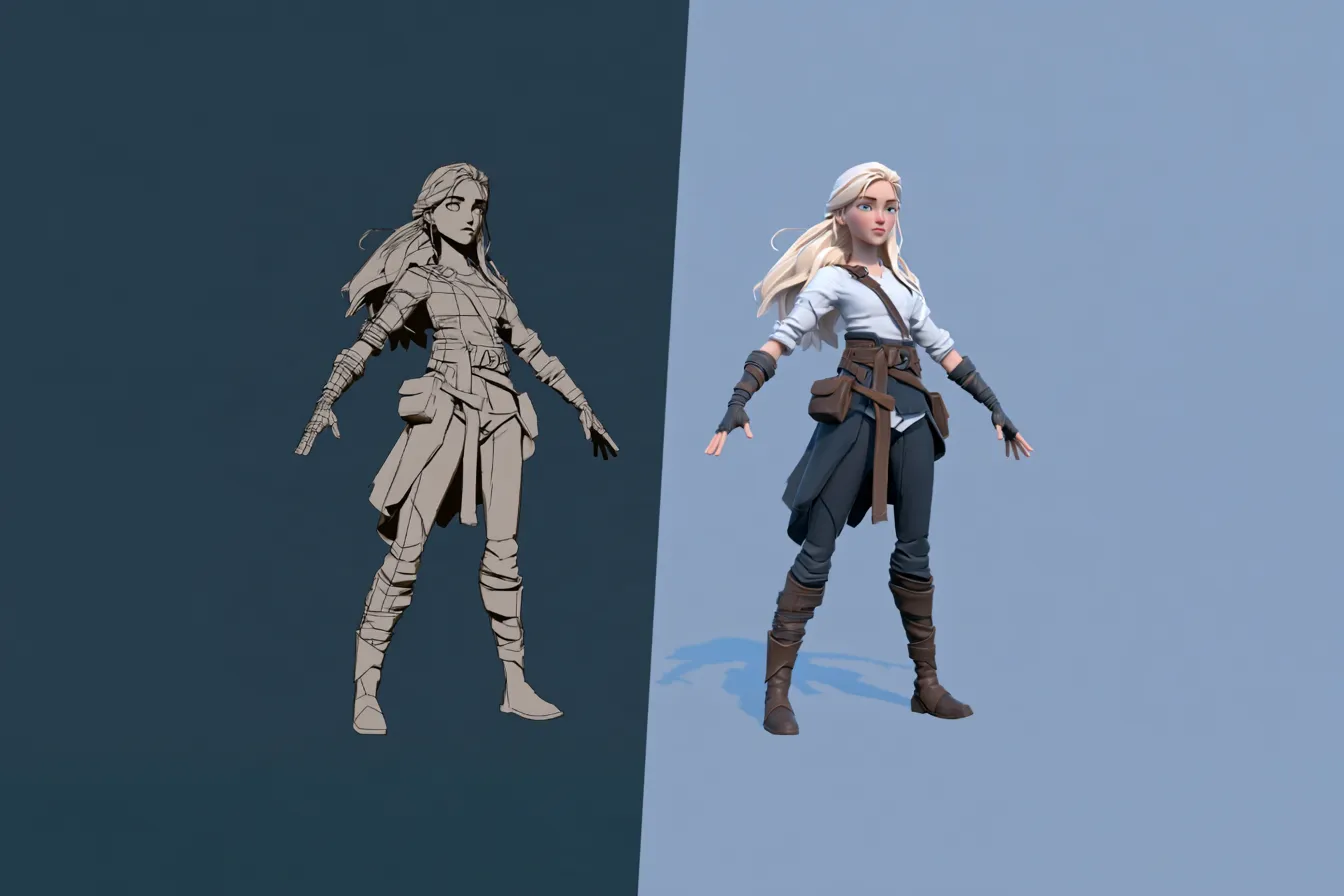
Rotoscope animation is a technique where animators trace over live action footage, one frame at a time, to produce lifelike movement. The traced result keeps the natural motion of the real performance.
The original setup was mechanical. Animators projected live action film onto a glass panel, then traced the figure onto paper frame by frame. Today the same idea runs in software, but the core act is unchanged, follow the real footage to capture real movement.

- Source. Live action footage of a real performance.
- Process. Trace the figure frame by frame.
- Result. Animation that moves with real world believability.
In short, rotoscoping was the first reliable way to get realistic motion into animation, and it worked by copying reality by hand.
How did rotoscoping start, and which films made it famous?#
Rotoscoping was invented by animator Max Fleischer in 1915, who patented it and kept it exclusive until 1934. His Out of the Inkwell series traced a clown performed by his brother to create fluid, lifelike animation ahead of its time.
Once the patent expired, the technique spread into some of the most recognizable animation ever made. A 2026 rotoscoping history traces the highlights.
- Snow White and the Seven Dwarfs (1937). Disney used rotoscoping for lifelike human characters.
- Take On Me by A-ha (1985). The iconic music video that transitions between sketch and live action.
- Ralph Bakshi’s films. The Lord of the Rings, American Pop, Fire and Ice, and Cool World leaned heavily on roto.
- A Scanner Darkly (2006). Animators traced over Keanu Reeves and the cast for its dreamlike look.
- Star Wars (1977). The glowing lightsabers were created with rotoscoping.
That range, from Disney to Linklater, is why rotoscoping is remembered as both a workhorse and an art form.
Why was rotoscoping so slow?#
The cost of rotoscoping was always time. Film runs at 24 frames a second, so one second of animation meant tracing 24 separate images by hand, and a minute meant well over a thousand.
- Frame by frame. Every frame is a separate drawing, with nothing automated.
- Consistency. Lines have to stay steady across frames, or the animation jitters and boils.
- Volume. Even a short film adds up to tens of thousands of individual frames.
That labor is why rotoscoping was reserved for productions that could afford it. It also explains why the industry chased any technology that could capture motion without drawing it, first sensor suits, then AI.
Rotoscoping vs motion capture, what is the difference?#
Both aim for realistic motion, but they get there differently. Rotoscoping shapes movement frame by frame, while motion capture records it in bulk as data.
| Aspect | Rotoscoping | Motion capture |
|---|---|---|
| Method | Trace footage by hand | Record movement as data |
| Output | 2D traced animation | 3D motion on a skeleton |
| Effort | Frame by frame, very slow | Captured in one take |
| Best for | Stylized looks and VFX mattes | Realistic 3D character motion |
The key line is simple. Rotoscoping captures how a performance looks, one frame at a time, while motion capture captures how it moves, all at once. For 3D characters, that difference is why mocap took over.
How did AI mocap replace hand tracing?#
AI mocap replaced hand tracing by extracting motion directly from video, so no one has to trace anything. It is the third step in a long move away from manual labor.
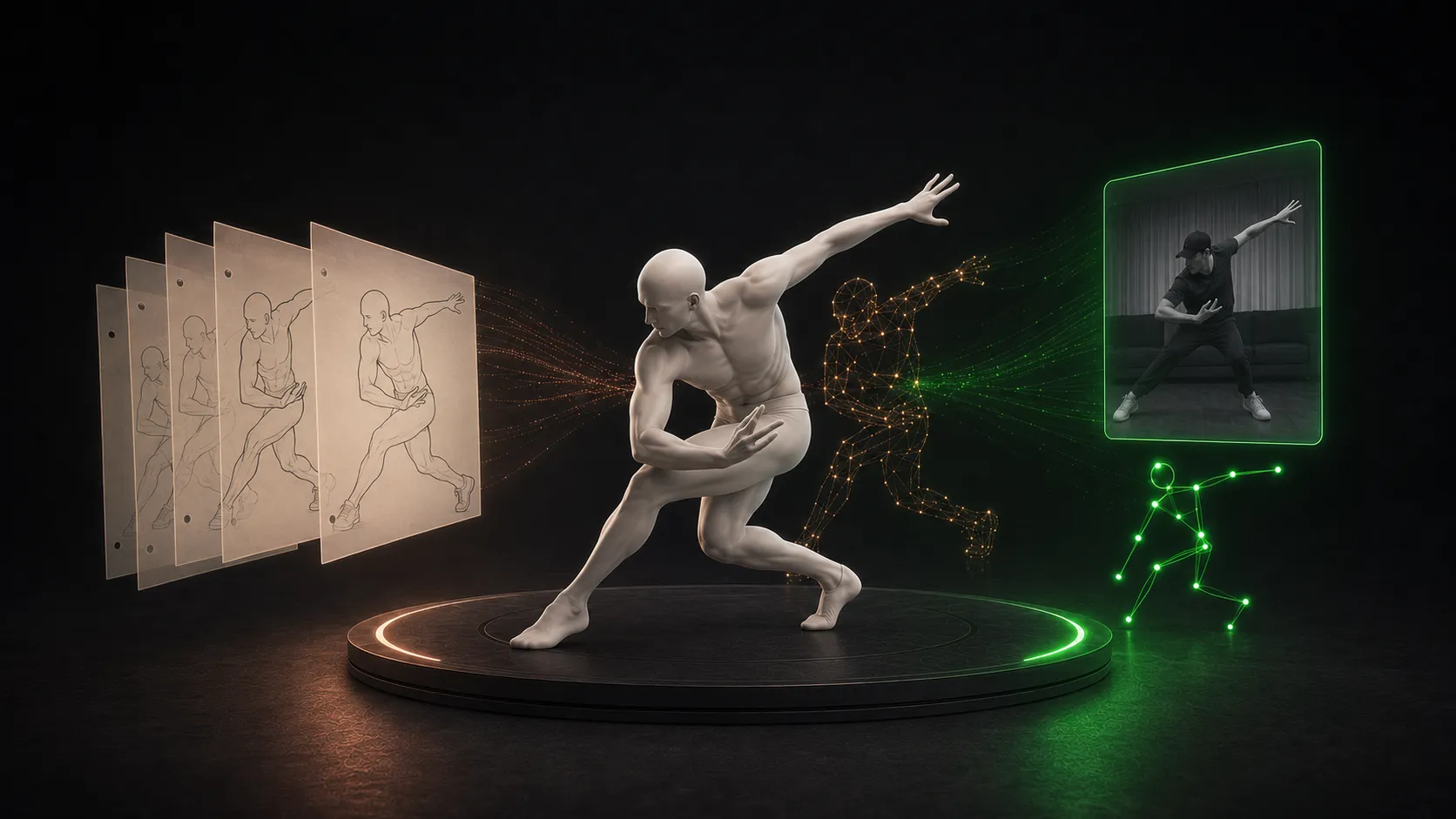
Captured motion has passed through three eras, which is worth naming as the Three Eras of Captured Motion.
- Hand tracing, from 1915. Rotoscoping copied real movement frame by frame, entirely by hand.
- Sensor capture, from the 1990s. Motion capture suits recorded movement with markers and sensors, removing the tracing but adding hardware.
- AI capture, from the 2020s. Markerless AI reads movement from plain video, removing both the tracing and the hardware.
Each era stripped out a layer of manual work. AI has cut even VFX AI rotoscoping labor by more than 60 percent, and for character motion, capture skips tracing entirely. Rotoscoping has not vanished, since its stylized look and VFX mattes still matter, but as a 2026 look at AI and mocap notes, realistic motion no longer means tracing frames.
Pro tip. If you love the rotoscoped aesthetic, keep it, since it is a style. If you only wanted realistic motion, you no longer need to trace anything to get it.
What is rotoscoping used for today?#
Rotoscoping did not disappear, it specialized. Today it lives in two places, both distinct from making a character move.
- VFX mattes. Roto artists trace objects to create mattes, isolating an element so it can be composited over a new background. This is the bulk of professional roto work now.
- Stylized animation. The distinctive traced look, seen in A Scanner Darkly, is a deliberate aesthetic choice, not a shortcut to realism.
What changed is the reason people reach for it. Almost nobody rotoscopes today just to make a character move realistically, because capture does that faster. They rotoscope for a matte or for a style. That split is exactly why AI replaced one use of rotoscoping while leaving the others alone.
How does Viggle PINOC give you rotoscope realism without the tracing?#
PINOC gives you the realism rotoscoping was after, real human motion, without a single frame traced by hand. It captures a performance from any video and turns it into 3D skeletal animation. It is the third era in one tool.
The workflow is the opposite of rotoscoping’s grind. Instead of tracing 24 frames per second, you film the movement once and let AI motion capture extract it as a 65 bone, Mixamo named skeleton animation. Because it uses a standard skeleton, the result retargets onto your character like any mocap clip.
That animation exports as FBX or GLB for Blender, Unreal, Unity, Maya, and Cinema 4D.
PINOC also has an image to 3D character feature that rebuilds a character image as a Gaussian Splatting model in the browser, so you can preview the motion on your character before export. You can also export the character model itself as a static PLY file.
Under the hood, PINOC runs on JST, Viggle’s in house video to 3D foundation model. JST is trained with physical priors, so captured motion respects weight, contact, and timing instead of lifting flat 2D keypoints frame by frame.

Here is what the modern path gives you.
- Real human motion from any video, with no tracing.
- A Mixamo named skeleton animation that retargets onto your character.
- FBX and GLB export into Blender, Unreal, Unity, and Maya.
- A browser preview of the motion on your character before export.
- The realism rotoscoping chased, in minutes instead of weeks, free to start.
The capture workflow lives inside Viggle PINOC, and it is free to start. If your goal is realistic 3D motion rather than a hand drawn style, it is the modern replacement for tracing.
Frequently Asked Questions#
What is rotoscope animation?#
Rotoscope animation is the technique of tracing over live action footage frame by frame to create realistic movement. It keeps the natural motion of a real performance, which is why it looked so lifelike long before motion capture existed.
Who invented rotoscoping?#
Max Fleischer invented rotoscoping in 1915 and patented it. His Out of the Inkwell series traced live action footage of a performer to produce fluid, lifelike animation, and Fleischer studios held exclusive use of the technique until the patent expired in 1934.
What movies used rotoscoping?#
Famous examples include Disney’s Snow White, Ralph Bakshi’s The Lord of the Rings, Richard Linklater’s A Scanner Darkly, the A-ha music video Take On Me, and even the lightsabers in the original Star Wars. Its range spans mainstream animation and experimental film.
Is rotoscoping still used today?#
Yes, but mostly for two things, a stylized hand drawn look and VFX mattes for compositing. For realistic character motion, motion capture and AI capture have largely replaced it, since they deliver real movement without tracing every frame.
What is the difference between rotoscoping and motion capture?#
Rotoscoping traces a performance frame by frame into 2D animation, capturing how it looks. Motion capture records the movement as 3D data in one take, capturing how it moves. For 3D characters, mocap is faster and more flexible, which is why it took over.
Can AI replace rotoscoping?#
For realistic motion, largely yes, since AI mocap extracts movement from video with no tracing. AI has also cut VFX rotoscoping labor by more than 60 percent, though complex mattes with motion blur and overlap still need a human touch. The style itself remains a creative choice.
How long does rotoscoping take?#
A long time. At 24 frames per second, one second of traced animation is 24 separate drawings, so even a short sequence runs to thousands of frames. That labor is exactly why motion capture and AI tools, which record movement without tracing, became the standard for realistic motion.
Conclusion#
Rotoscoping was a brilliant answer to a hard problem, how to make animation move like life, and it earned its place from Snow White to A Scanner Darkly. But it solved realism with sheer manual labor, tracing frame after frame. Motion capture removed the tracing, and AI capture removed the hardware too. The rotoscoped look survives as a style, yet the realism it chased is now instant, free to start. With a tool like Viggle PINOC, a single video does what once took weeks of tracing. The animators who traced Snow White frame by frame would not believe how easy their hardest problem became. That is the quiet story of this technology, a century of manual labor compressed into a single upload.