AI Character Animation That Keeps Animators in Control
An honest account of AI character animation. What it is genuinely good at, what still needs hands, and exactly where the handoff between the two sits.
Viggle
Key Takeaways#
- Visual and technical artists are the most sceptical discipline in games about generative AI, at 64% unfavourable. That scepticism is earned and worth taking seriously rather than arguing away.
- Generated motion is reliable on gross movement and unreliable on the detail that carries intent. Those two facts define where the handoff sits.
- The gain is iteration count, not headcount. One creator reported locking a motion in three samples instead of the fourteen to twenty passes it used to take.
- Refining a base layer is different work from keying from zero, with a different skill emphasis. It is not a lesser version of the same job.
- Tools built around a refine workflow, PINOC among them, return several takes per run, preview the motion on your character before export, and hand over editable keyframes rather than rendered video. The polish pass stays with the animator by design.
- The animator decides what a movement means. No current tool touches that.
- Measured productivity gains from AI in film and television sit at five to ten percent in specific use cases, not the transformation the marketing describes.
In January 2026 the Game Developers Conference found that 64% of people working in visual and technical art hold unfavourable views of generative AI, the most negative of any discipline it surveyed. That is from the GDC industry survey, and it is the correct place to start an article about AI character animation.
The scepticism is not ignorance. Animators have watched a decade of tools promise to remove the tedious part of the job and instead remove the interesting part while leaving the tedium intact.
This is an honest account of where generated motion actually helps, where it does not, and why the boundary between those two sits exactly where it does.
What Is AI Character Animation Genuinely Good At?#
Volume, speed and the willingness to try a fourth idea. Those three, and they are more valuable than they sound.
The pattern is consistent across every tool in this category. Gross body movement transfers well. Stride, weight transfer, the overall shape of an action, coarse timing. That is enough to answer questions, which is what most early stage animation work is for.
- Blocking. A base layer arrives in about a minute instead of an afternoon, so blocking stops being a commitment.
- Iteration. The real gain. When regenerating costs nothing, you test four versions of a movement feel rather than defending the first.
- Volume work. Twenty background characters who need to behave rather than perform.
- Moves you cannot film. Written descriptions cover action nobody in the room can perform, which no capture method solves.
One creator working with generated motion described the change in iteration count directly, saying they now lock a motion in about three samples where the same result previously took fourteen to twenty passes. That is the shape of the benefit, and notice what it is not. It is not fewer animators. It is more attempts per animator.
What Still Needs an Animator's Hands?#
Everything that carries intent. The list is stable, well understood, and has not moved much in two years despite the release notes.
| What needs hands | Why generation cannot do it |
|---|---|
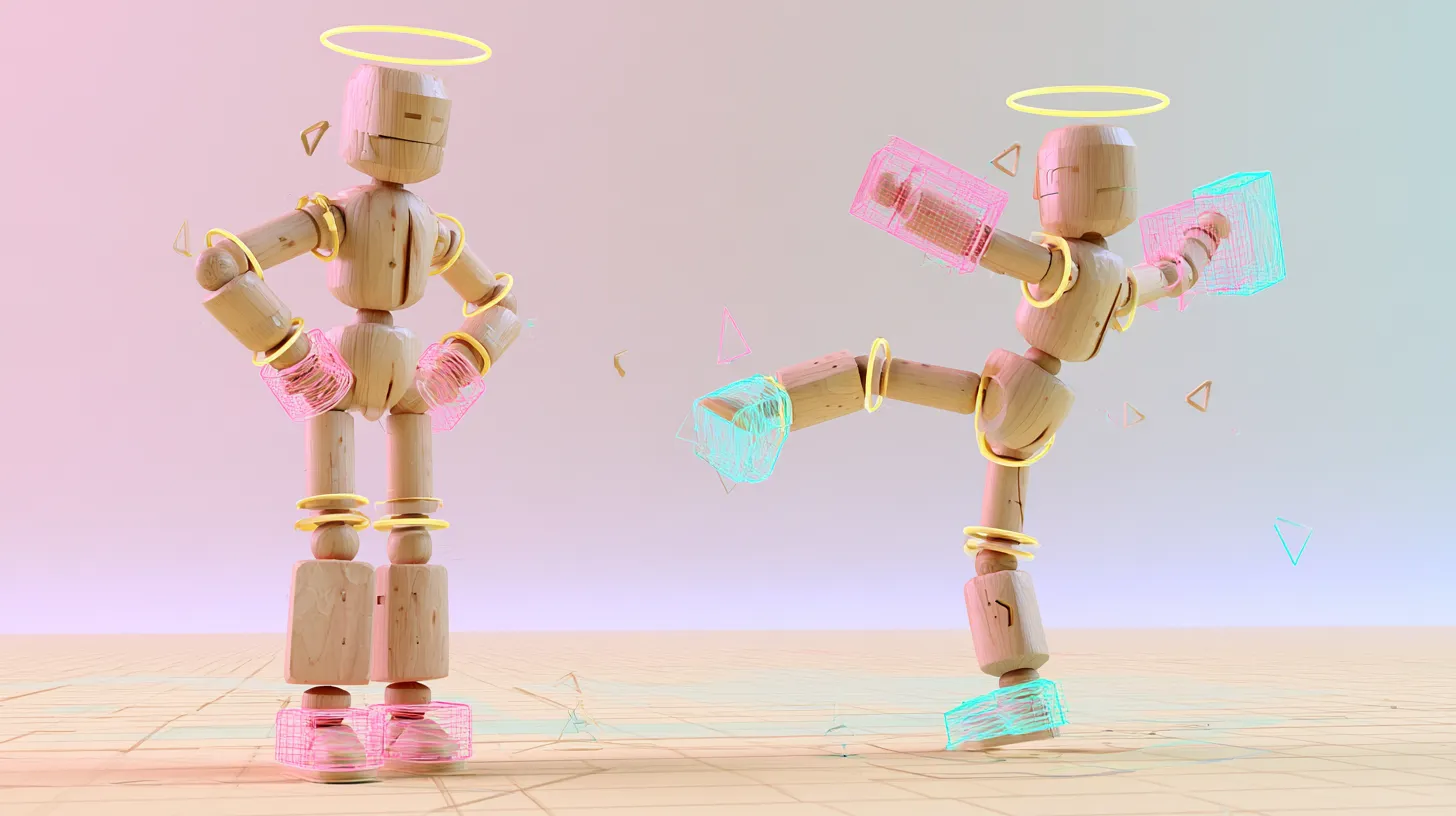
| Contact frames | Single camera capture infers ground contact rather than measuring it, so landings arrive soft |
| Arcs and timing polish | These are aesthetic decisions about emphasis, not reconstructions of a real movement |
| Exaggeration | Models trained on real capture pull toward realism by construction, so stylisation fights the tool |
| Signature movement | The walk that identifies a character before they speak is a design choice, not an average |
| Faces and fingers | Last to arrive and least reliable across every tool in the category |
There is a measurable reason contact frames land softly. Peer reviewed comparisons in Sensors in June 2026 put markerless capture within roughly two to three degrees of marker based systems on hip and knee flexion, while secondary rotations degraded to six degrees and beyond. The readable motion survives. The specificity does not.
The Refine Line#
Every shot has a point where generation stops paying and craft starts. Finding it early is the whole skill of working this way, and four questions locate it reliably.
- How long is it on screen? Under a second and nobody studies it. Held for four seconds and every arc gets read. Screen time is the strongest single predictor of how much hand work a shot deserves.
- Does anything make contact? Feet planting, hands gripping, bodies colliding. Contact is where generated motion fails first and most visibly, so any shot with contact crosses the line early.
- Is it realistic or stylised? Realism is what the model was trained on. Anything exaggerated starts on the wrong side of the line and stays there.
- Does this movement identify the character? If a viewer should recognise who it is from the movement alone, that is authorship. Generation produces competence, not identity.
Answer those four and you know how to budget the shot before touching it. Most shots in a project sit comfortably on the generation side, which is exactly why the ones that do not deserve the time you saved.
What Does the Handoff Actually Look Like on One Shot?#
Take a character vaulting a low wall and landing badly. Here is what survives generation and what gets replaced.
PINOC’s own capture-to-export walkthrough, posted by @Viggle_PINOC on X.
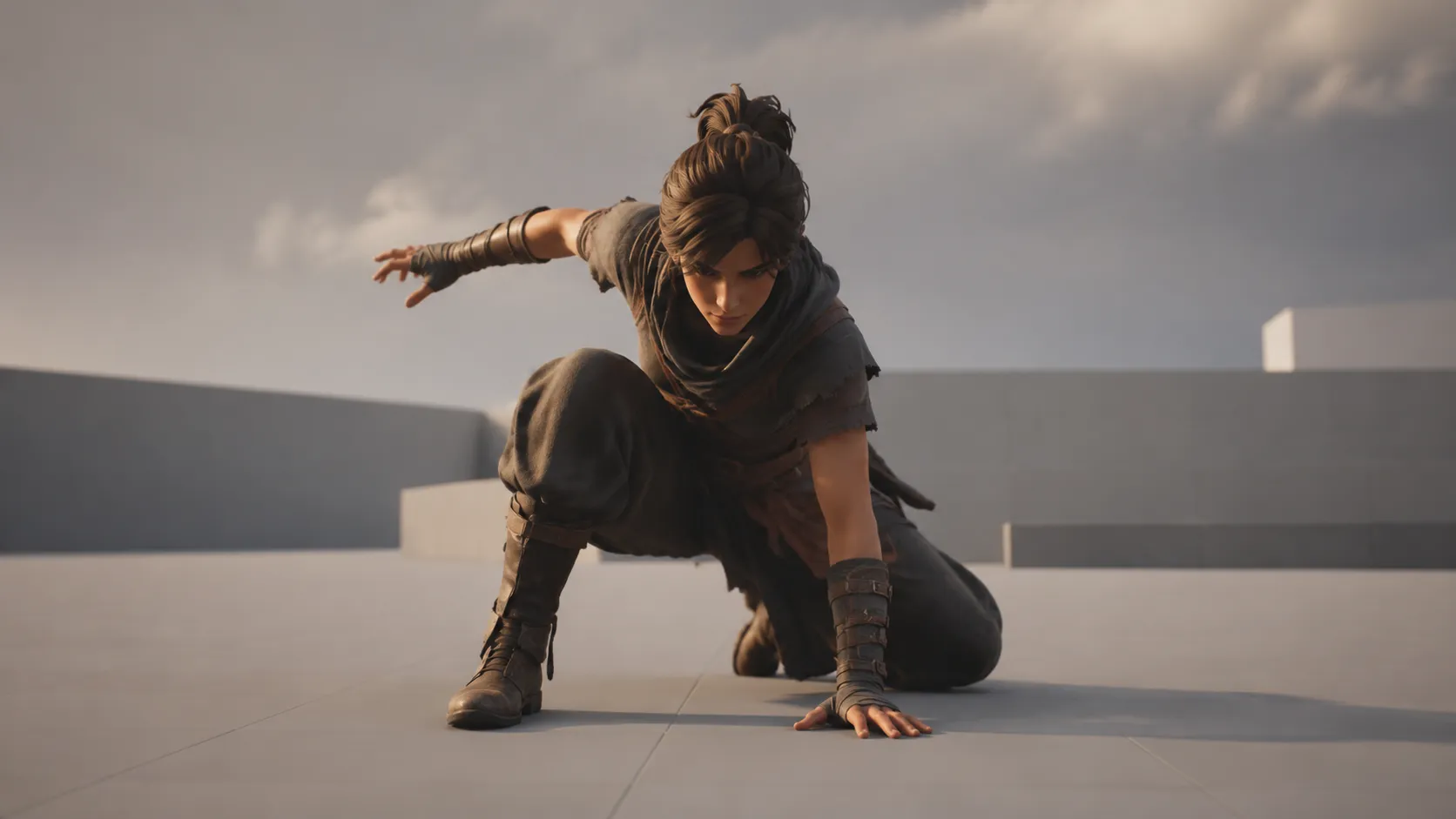
The generated pass gives you the approach run, the plant, the vault arc and the rough recovery. Timing at a coarse level is right. The character reaches the wall when it should and lands roughly where it should. That is perhaps seventy percent of the shot, arriving in a minute.
What needs replacing is specific and predictable. The plant frame where the hand meets the wall, which will be floating by a few centimetres. The landing contact, which will be soft where it should be heavy. And the two frames of the stumble, which is the entire point of the shot and the reason anybody is watching.
- Keep the approach and the arc. Rebuilding those by hand adds nothing
- Fix the contacts, because those are the frames that read as wrong even to a non animator
- Hand key the stumble, because that is the performance and it should be authored
- Adjust overall timing last, once the contacts are locked
Total hand work, a handful of poses instead of a full blocking pass. That is the actual arithmetic of this way of working, and it explains why the benefit shows up as iteration rather than as fewer people.
How Does PINOC Keep the Animator in Control?#
PINOC is built around producing a first pass you refine, and the design choices follow from that rather than from trying to produce a finished shot.
On why AI does not replace the animator, from DANI (@alittledani). View the original reel on Instagram.
Three of those choices matter for control specifically. Every run returns several takes rather than one, so you are choosing a performance rather than accepting one. You preview on a character in the viewport before exporting, so nothing enters your scene without being judged. And the export is editable animation data rather than video, so every decision downstream remains yours.
- Capture from a clip you filmed, or describe the move in writing where no footage exists
- Clip length is yours to set, which keeps a beat from sprawling past the moment you wanted
- An optional first or last frame image pins a starting or ending pose when a shot has to match either side of it
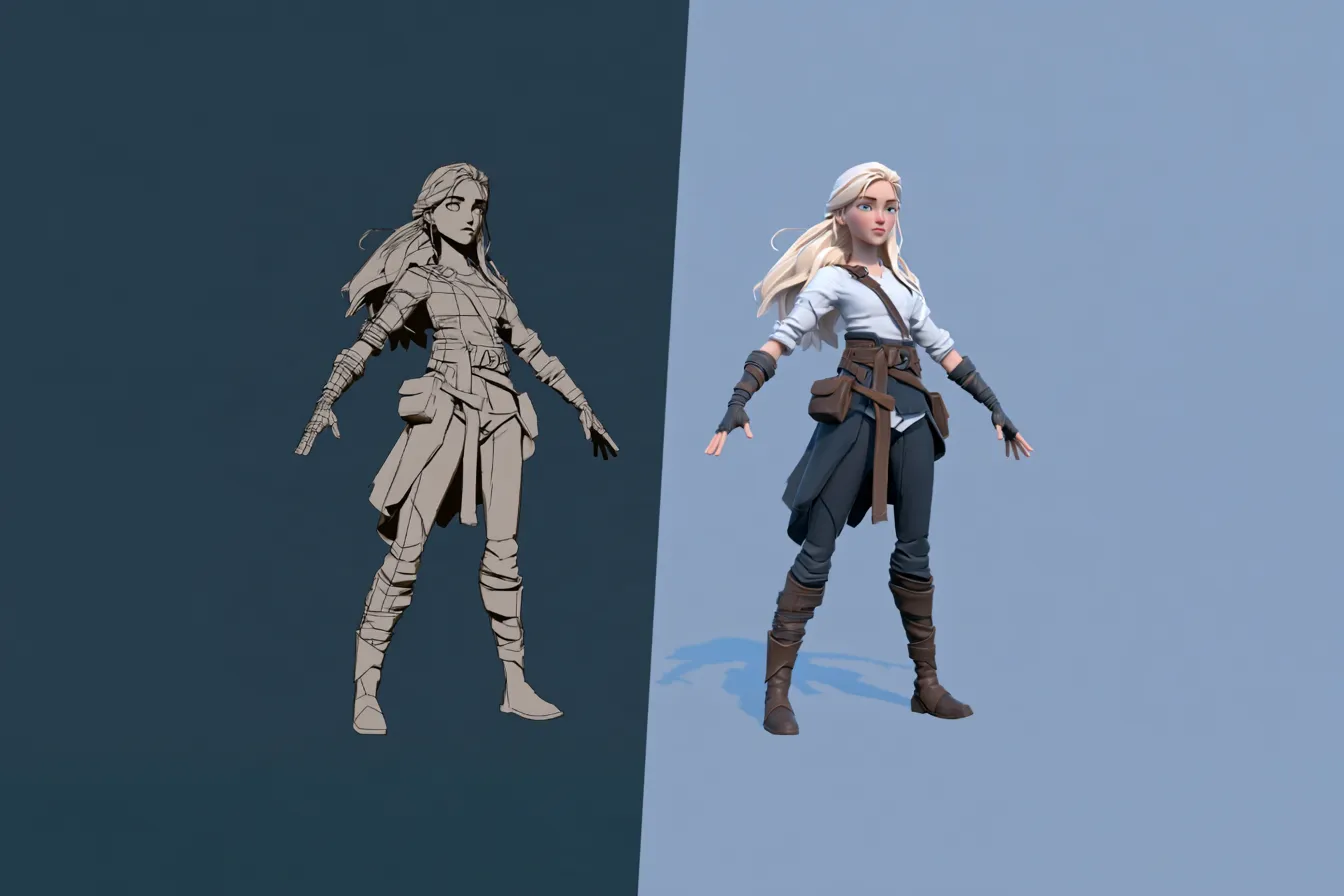
- Two ways to put the motion on a character. The first is your own mesh: upload it, have it rigged and retargeted inside the tool, so you refine your character rather than a stand in
- The second is a Gaussian splat character: upload a character image and PINOC reconstructs it as an animated 3D model, so you judge every take on your character in the viewport. Plugin support for taking splat characters into your own tools is on the roadmap
- Mesh route exports are FBX and GLB, editable keyframes that open in Blender, Unity, Unreal, Maya, Cinema 4D and Houdini, so every decision downstream stays yours
- The free tier includes credits covering about a minute of motion
Underneath sits JST, Viggle’s in house model, trained with physical priors rather than pure pose data. The practical effect for an animator is less correction work on weight and ground contact, which is the least interesting part of the cleanup.
What it does not do is finish anything. There is no polish pass, no arc refinement and no timing judgement. The text to motion route in particular produces a starting point that assumes somebody competent is about to take over.
Does This Actually Replace Animation Work?#
No, and the measured evidence is less flattering to the tools than either side of the argument suggests.
McKinsey’s January 2026 analysis of film and television production found leaders reporting productivity increases of five to ten percent in specific use cases. Not a transformation. A useful, incremental gain concentrated in particular tasks.
That matches what practitioners describe. The work that disappears is the twelfth variation of a background shuffle. The work that remains is everything requiring a decision, and that work does not get faster because the base layer improved.
- Volume work compresses substantially, which is where the time saving is real
- Hero shot time barely moves, because generation contributes little to a shot that gets rebuilt anyway
- Review time can increase, since generated passes look more finished than they are and get approved too early
- Asset management gets harder, because cheap takes multiply and most teams have no convention for the ones they discard
One opinion stated without hedging. The animators who are getting the most from this are not the ones who trust it most, they are the ones who are hardest to satisfy. Scepticism is a productive stance here, because the tool rewards someone who knows precisely what is wrong with a take and can fix it in four poses. It punishes anyone who cannot tell.
Frequently Asked Questions#
Will AI character animation replace animators?#
Not on current evidence. Generated motion is reliable on gross movement and unreliable on contacts, arcs, exaggeration and anything carrying intent, which is precisely the work animators are employed for. What changes is the entry point, since refining a base layer is different work from keying from zero. Measured productivity gains in film and television sit at five to ten percent in specific use cases rather than across the board.
How much of a generated animation do you usually keep?#
On a typical shot, the approach, the overall arc and the coarse timing survive, while contact frames and any performance beat get replaced. That works out to keeping most of the motion and rebuilding the moments that matter, which is a handful of poses rather than a full blocking pass. Hero shots keep far less, sometimes nothing beyond reference.
Why does generated motion look floaty?#
Because single camera capture infers ground contact rather than measuring it, so contact frames are estimated and land softly. Models trained with physical priors handle this better than pure keypoint tracking, but none eliminate it. Test any tool on a jump landing rather than a walk cycle, since that exposes weight handling within a couple of seconds.
Is AI animation worth learning if I already animate by hand?#
Yes, and it suits experienced animators better than beginners, which is the opposite of what most people assume. The skill it rewards is knowing exactly what is wrong with a take and fixing it efficiently, which is precisely what hand animation teaches. Someone who cannot identify the flaw in a generated pass will ship it, and it will look generic.
Does generated animation work with my own character?#
Yes, through retargeting, and how much work that is depends on skeleton naming. Motion arriving on a widely used convention maps almost automatically. Some tools now let you upload your mesh and retarget inside the tool, which removes the export and reimport loop entirely. Test this before committing, because it is the largest hidden cost in the workflow.
Should I tell clients an animation was AI assisted?#
That depends on your contract and your relationship, but the practical answer is that transparency avoids a worse conversation later. Many studios now ask directly. Framing it accurately helps, since a generated first pass refined by an animator is a different claim from a generated final, and the second one is rarely what anybody actually shipped.
Conclusion#
The version of this technology that deserves the scepticism is the one that promises finished animation. That version does not exist, and the tools claiming otherwise are demonstrating on walk cycles.
The version worth using is narrower and duller. It gives you a plausible base layer in a minute so you can spend your judgement on the four frames that carry the shot.
The machine can produce movement. Deciding what that movement means is still the job, and it is still yours.